
1. Market Landscape: The Converging Forces of 2026
The North American electronics manufacturing landscape in 2026 is defined by a strategic bifurcation of “reshoring” to the U.S. for high-security applications and “nearshoring” to Mexico for high-volume automotive and industrial sectors. The regional Electronic Manufacturing Services (EMS) market is projected to hit USD 120.71 billion this year, sustained by a 5.74% CAGR. Notably, printed circuit board assembly (PCBA) accounts for the lion’s share of this activity, capturing 42.76% of the market. This surge is underpinned by the CHIPS and Science Act, which provided USD 36.4 billion in preliminary awards to stimulate domestic semiconductor and advanced packaging ecosystems. While the U.S. anchors ITAR/CMMC-compliant production, Mexico has emerged as a high-volume powerhouse, bolstered by USMCA rules of origin and USD 36.1 billion in recent foreign direct investment (FDI).

2. Deep Dive: Top High-Demand Electronics and PCBA Specifications
AI Servers & High-Performance Computing
The expansion of Generative AI has moved beyond experimentation into massive hardware deployment. The primary driver is the AMD MI325X accelerator, which draws up to 750W per module.
- Technical Specs: Requires high layer counts (30+), utilizing high-density interconnect (HDI) and substrate-like PCBs (SLP).
- Thermal Management: Hot-spot densities are now exceeding 150 W/cm² . This necessitates micro-machined cold plates and liquid-cooling manifolds to prevent thermal throttling.
- Signal Integrity: Deployment of low-loss materials to manage high-speed signal paths required for high-bandwidth memory (HBM).
Drones & Professional UAV Systems
Professional Unmanned Aerial Systems (UAS) for security and traffic monitoring demand an “electronic backbone” that resists environmental stress.
- Flight Control: Transitioning to H743 flight controllers requiring sub-micron component placement accuracy.
- Sensing: Integration of synchronous sampling for acoustic arrays utilizing 64-192 channel MEMS microphones (20Hz–80KHz range).
- Build Quality: Use of rigid-flex substrates for weight reduction and 2oz+ copper for high-current power distribution, alongside comprehensive EMI/EMC shielding.
Electric Vehicle (EV) Systems & ADAS
Automotive electrification requires a 3x to 5x increase in PCB area compared to internal combustion vehicles.
- Quality Standards: All Battery Management Systems (BMS) and radar/vision modules must meet IPC Class 3 standards for mission-critical reliability.
- Durability: Use of advanced edgebond reinforcements (e.g., ALPHA HiTech) to protect BGA components from extreme automotive-grade vibration.
- Complexity: Quick-turn prototyping is essential for sensor-fusion modules to meet compressed 8-week design windows.
Smart Home Security (Ring Cameras & IoT)
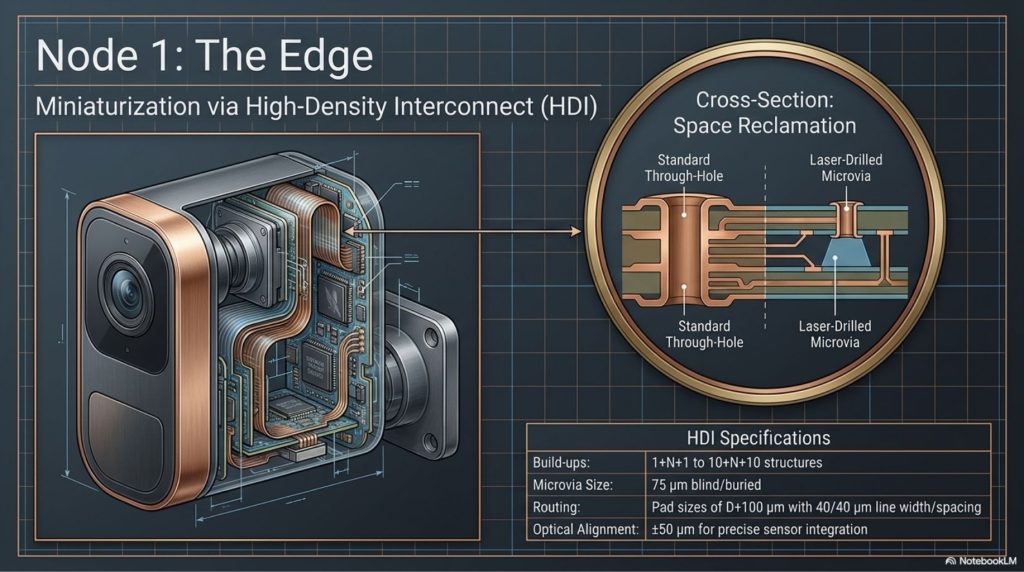
The drive for miniaturization in consumer and diagnostic IoT has pushed SMT boundaries.
- Component Density: Utilization of 0201-sized components placed with sub-micron accuracy.
- Form Factor: “Break the mold” 3D-forming approaches using flexible polyimide substrates that conform to ergonomic enclosures.
- Connectivity: Integration of WiFi 6 and Bluetooth modules with optimized low-power circuit designs.
Next-Gen WiFi Routers & Communications
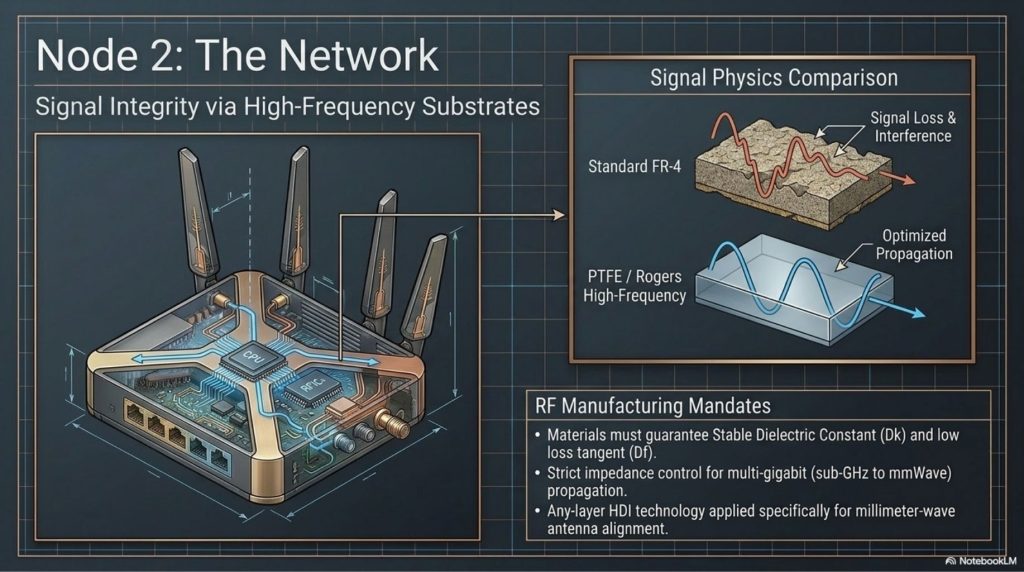
5G infrastructure and 6G research require materials that can handle frequencies from 10 MHz up to 40 GHz with minimal loss.
- Specialized Materials: Deployment of Rogers RO4350B (often in hybrid presses with S1000-2M) and Taconic TSM-DS3
- Architecture: Use of resin-plugged vias and back-drilled boards to ensure signal purity and mitigate impedance mismatches.
3. Technical Comparison: Product-Specific PCBA Attributes
Product Category,Typical Layer Count,Primary Material,Key Assembly Tech,Thermal/Design Strategy,Quality Standard
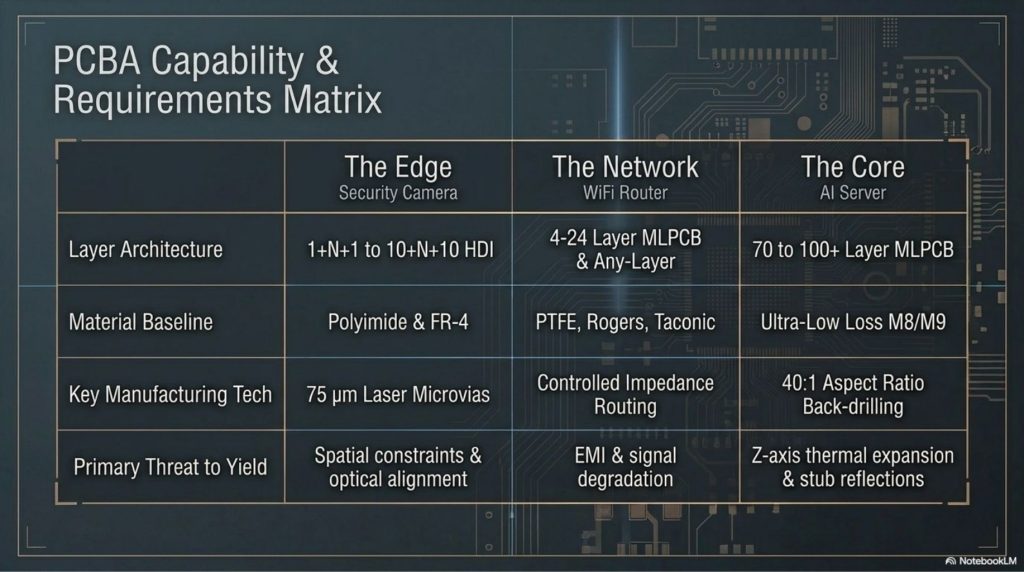
AI Servers,20 – 30+,High-Tg FR4 / SLP,”HDI, 2.5D Packaging”,Liquid Cooling / Cold Plates,Enterprise Grade
Drones/UAV,8 – 16,Rigid-Flex / High-Tg,”SMT 0201, MEMS”,2oz+ Copper / EMI Shielding,Aerospace / Mil
EV / ADAS,6 – 12,High-Tg FR4,Chiplet Assembly,Metal Core / Edgebonding,IPC Class 3 / IATF 16949
Smart Home,4 – 8, Flexible Polyimide, “SMT 0201, 3D-Forming”, Low-Power Optimization, Consumer High-Reliability
WiFi / Comms,8 – 14,Rogers / Taconic,High-Freq Hybrid,Resin Plugs / Back-drilling,Telecom Carrier Grade
4. Market Velocity: Core Demand Drivers
- Electrification: Automotive board content is skyrocketing; current NHTSA mandates for automatic emergency braking (AEB) on all light vehicles by model year 2029 are forcing immediate hardware integration in 2026 designs.
- Generative AI Expansion: Beyond data centers, edge-AI accelerators are being embedded into industrial robotics and inspection systems, requiring high-speed neural network processors.
- Regulatory Mandates: The February 2026 FDA Quality Management System Regulation (aligning 21 CFR Part 820 with ISO 13485) has forced medical OEMs to consolidate work with highly certified domestic partners.
- Global Connectivity: The deployment of Starlink’s 42,000-satellite roadmap and 5G/6G backbone upgrades are driving continuous demand for high-frequency, low-latency PCBAs.
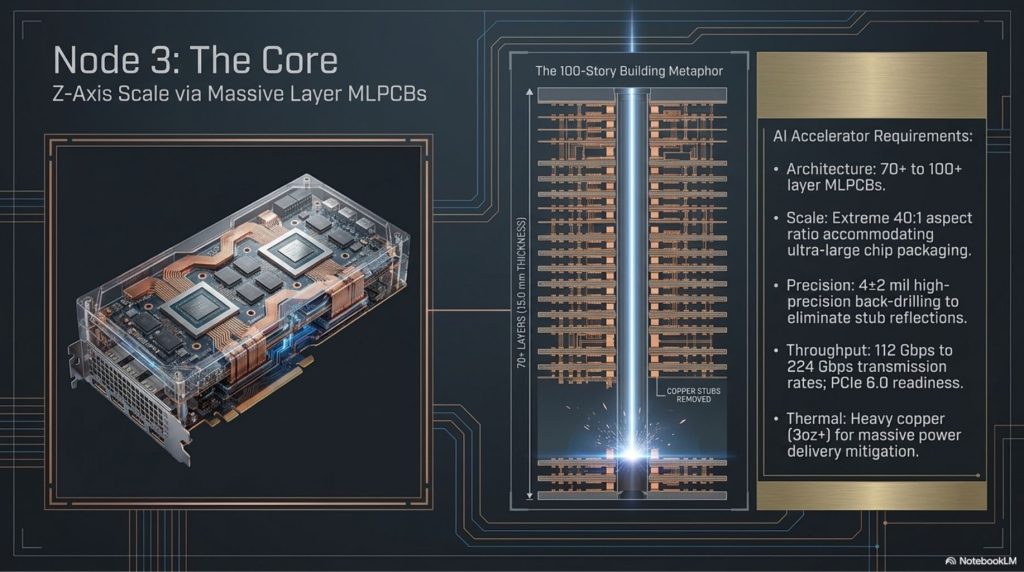
5. Architectural Visualization: AI and Smart Home PCBAs
AI Processing Boards
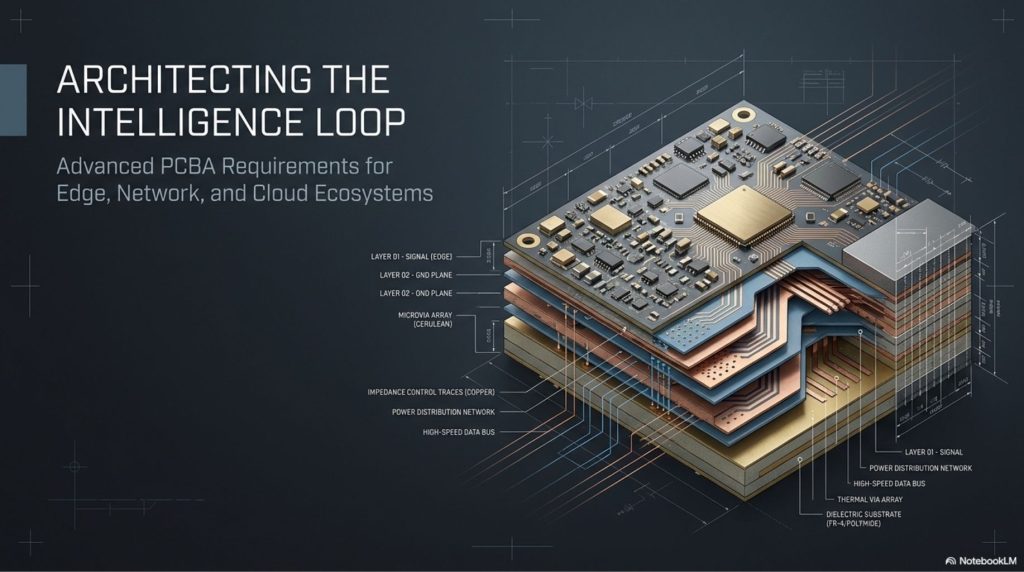
Internally, these boards represent a structural shift from traditional SMT. They feature a high-density “nervous system” utilizing 2.5D interposers and fan-out wafer-level packaging . This architecture uses micro-vias and buried vias to connect chiplets and AI accelerators with high-bandwidth memory. The physical board is often interfaced directly with micro-machined cold plates capable of dissipating heat loads that would melt standard FR4 substrates.
Smart Home/Wearable PCBAs
These assemblies utilize a 3D-forming approach , where flexible polyimide substrates allow the circuit to “break the mold” of flat electronics. The boards conform to the internal curves of sleek enclosures. Component density is extreme, featuring 0201 parts placed with sub-micron accuracy to support complex features like bio-sensing or rapid molecular diagnostics in a footprint no larger than a coin.

6. Manufacturer Selection: Detailed Pros/Cons Analysis
Manufacturer Type,Strategic Pros,Strategic Cons
Domestic / Specialized (U.S. / Nearshore),”NPI Speed: Proximity enables 8-week design cycles. Compliance: Full ITAR, CMMC, and ISO 13485 alignment. Resilience: Avoids 20–40% disruption risks of transoceanic supply chains.”,Labor: Acute skilled labor shortages in Tier-2/3 shops. Cost: Higher initial labor rates; impact of U.S. copper and PFAS regulatory costs.
Offshore High-Volume (Asian Megasites),”Scale: Capacity for millions of units. Unit Price: Lowest per-unit cost for mature, commodity-level builds. Ecosystem: Integrated supply of legacy components.”,Volatility: Exposure to significant shipping delays and 5.5% global supply chain shifts. Tariffs: Exposure to aggressive copper and semiconductor-related tariffs.
7. Strategic Recommendations for OEMs in 2026
- Prioritize TCO and FEOC Compliance: Factor in the “hidden costs” of offshore logistics (carrying costs, expedited freight). Critically, ensure your supply chain is free of Foreign Entities of Concern (FEOC) to avoid disqualification from federal tax credits under the latest reshoring incentives.
- Mitigate NPI Bottlenecks: Engage EMS partners during the Design for Manufacturability (DFM) phase . High-frequency laminates (Rogers/Taconic) and High-Tg materials are “materials disruptors” that can create 30-45 day lead-time delays if not planned for during the initial NPI cycle.
- Foundation of Traceability: In an era of increasing regulatory oversight (FDA 2026, AEB 2029), utilize manufacturers capable of serial-level traceability . This links specific components and process parameters to individual units, protecting the OEM during warranty or audit cycles.
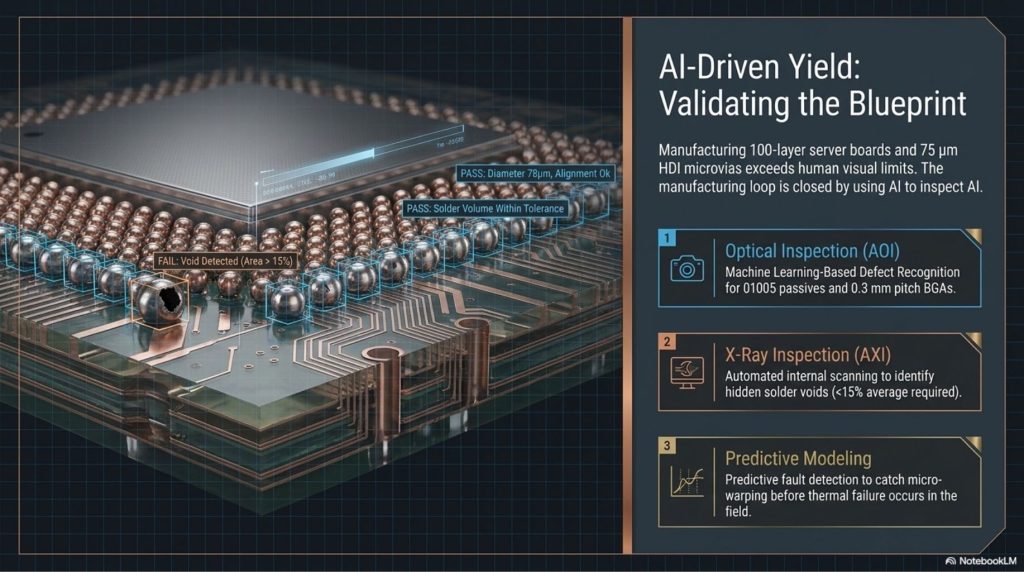
8. Conclusion: The Maturation of Embedded Intelligence
2026 marks the turning point where advanced electronics have transitioned from experimental prototypes to distinct, mission-critical architectures. Whether in the 750W environments of AI servers or the sub-micron accuracy required for medical wearables, the era of “standard” PCBA is over. OEMs must now navigate a landscape where material science, thermal management, and regulatory compliance are as vital as the circuit design itself. Success requires a specialized ecosystem of manufacturing partners capable of delivering real-time intelligence at the edge with absolute reliability.